
Share This Article
Legal Sea Foods Undergoes Next Evolution

THE CLASSIC CHAIN IS SET TO OPEN A NEW INNOVATION CENTER AND DRIVE AN UPGRADED E-COMMERCE PLATFORM FOR GUESTS NATIONWIDE.
When PPX Hospitality Brands purchased Legal Sea Foods almost three years ago, it wasn’t just getting a collection of cult-favorite restaurants in the Northeast. It also took on a 75,000-square-foot Quality Control Center featuring a seafood processing facility, commissary kitchen, and corporate office space.
In the past couple of years, it became apparent that much of the equipment and technology were outdated. Even if Legal’s unit count (25 stores) were to double overnight, the space would still be larger than needed. So the classic chain was faced with a choice: invest and renovate or sell and move out. The company chose the latter after negotiating with processor Stavis Seafoods, which needed to consolidate its operations under one roof. The price of the transaction was undisclosed.
In exchange, the processor had exactly what Legal was looking for—refurbished office space along Boston’s Fish Pier, close to key seafood partners like North Coast Seafoods, local fishing vessels, and the chain’s flagship restaurant, Legal Harborside. The new corporate location houses accounting, HR, marketing, IT, purchasing, operations, e-commerce, and retail departments. Legal employees work alongside PPX’s other brands, Smith & Wollensky and Strega Italiano.
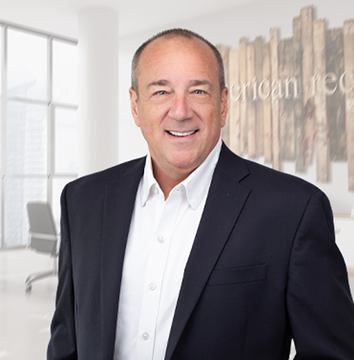
“It’s important for us to maintain a presence and live down here, really embedded within the fishing industry in Boston,” says Matt King, president and COO.
Matt King
King says the older headquarters, largely built as a processing plant, was from a time when the seafood industry wasn’t as sophisticated. Legal was the leader in safe processing, so it made sense for the company to do it in-house. But with the evolution of the industry, higher standards have been adopted and become table stakes. Because of this, the brand buys most of its fish from local processors.
With seafood processing no longer a differentiator, Legal explored how it could maintain its leadership position.
In lieu of the quality control center, Legal is constructing a new innovation center that provides the efficiency, speed, and quality assurance required of a forward-looking company. Based in Milford, Massachusetts—about an hour southwest of the Boston Fish Pier—the space will see the development of new recipes and facilitate marketing, content creation, and training thanks to a fully functioning television studio. There’s also a hydroponic farm situated inside a shipping container offering fresh vegetables and herbs throughout the year. Additionally, a set of solar panels on the rooftop has ensured zero net electricity consumption for over 10 years. The facility serves Smith & Wollensky, Strega Italiano, and Legal Sea Foods.
The innovation center came about through a friendship with Clarke, the showroom and test kitchen for appliance brands Sub-Zero, Wolf, and Cove. PPX will use 30,000 square feet of Clarke’s 107,000-square-foot headquarters. The space is scheduled to open in 2024.
“Where do we bring the company next?” King says. “What are we now doing with that great product that we have access to? It becomes more about innovating from a culinary and beverage standpoint of, reinventing what is New England seafood. What can we do with our local catch as well as fish that is being brought in from all over the world?”
The facility will help bolster Legal’s new e-commerce platform where customers can purchase the brand’s New England Clam Chowder, as well as other fish and seafood products. The chain previously had a mail-order business for many years with printed catalogs of available items. This updated venture aims to ensure that the food delivered matches the quality and representation of dishes served in the restaurants. The chain felt there “was a disconnect between what we were doing in the restaurants and the creativity that we were putting behind dishes and what was available online,” King says. All choices on the website list ingredients and specific instructions on how to prepare the dish.
As part of the innovation center, Legal is investing more in technology around packaging and processing equipment.
“When you order something and you get it delivered at home, the box and that packaging is the table and the plate,” King says. “And in a restaurant, we put so much attention into the table setting and the china and what we’re serving it on that we’re giving that same attention to the box and environmentally friendly packaging that we’re using—no longer shipping things in a Styrofoam-lined cardboard box. We’re sending everything in ecologically friendly recyclable packaging.”
In 1950, George Berkowitz founded Legal by opening a fish market in Cambridge, Massachusetts. He expanded into the restaurant business 18 years afterward. Throughout the year, the eatery presents over 40 different types of fresh fish and shellfish. Notably, its New England Clam Chowder has graced every Presidential Inauguration since 1981.
When PPX took over, Legal had 27 restaurants, having had six that permanently shut down due to COVID. The brand’s biggest presence is in Massachusetts, with 20 stores. Two are in Virginia, and one each in New Jersey, Rhode Island, and Pennsylvania. This upcoming winter, Legal will open its sixth spot inside Boston’s Logan International Airport. And then in the spring, the brand will debut its first unit in Chicago, which King hopes will serve as a gateway toward westward expansion. The midwestern move comes after Legal tested the market two years ago with a ghost kitchen. The brand operated out of a Smith & Wollensky kitchen and had deliveries fulfilled by DoorDash. Florida and Las Vegas— also known markets of Smith & Wollensky—are on the radar as well.
For Legal, reasonable growth is about two to three restaurant openings per year.
“We’ve been going through in the past year a lot of work on reimagining what the new Legal Sea Foods looks like inside and identifying what those finishes are,” King says. “Construction costs are through the roof. It does not cost what it used to cost to build the restaurant anymore. So identifying the finishes that give us the look that we want without having to be always custom or the most expensive of finishes. A lot of that comes with just partnering with the right architecture and design firms to identify what those solutions are and then finding the right partners and landlords that really want us to be in the space.” Source: FSR.